



|
Quantity
|
Total
|
||
|
|
|||
|
|
|||
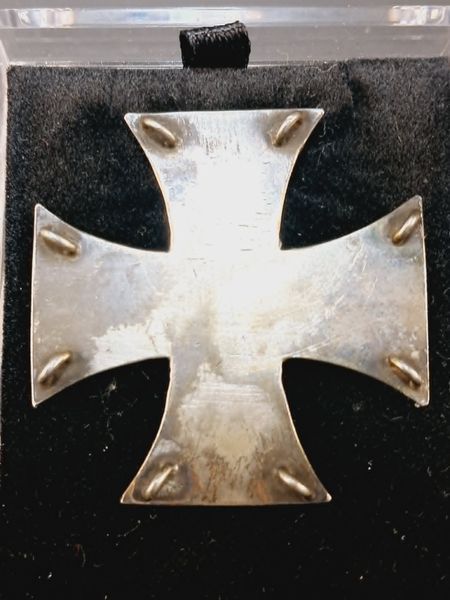
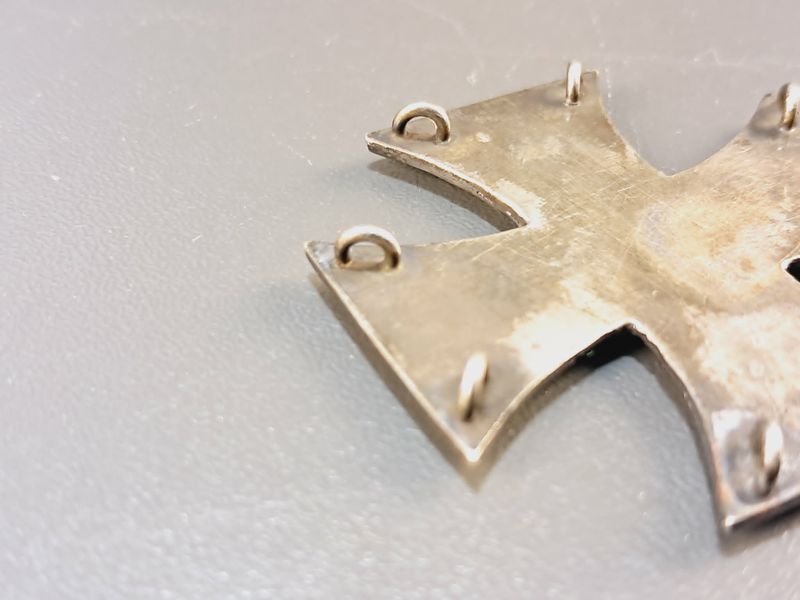
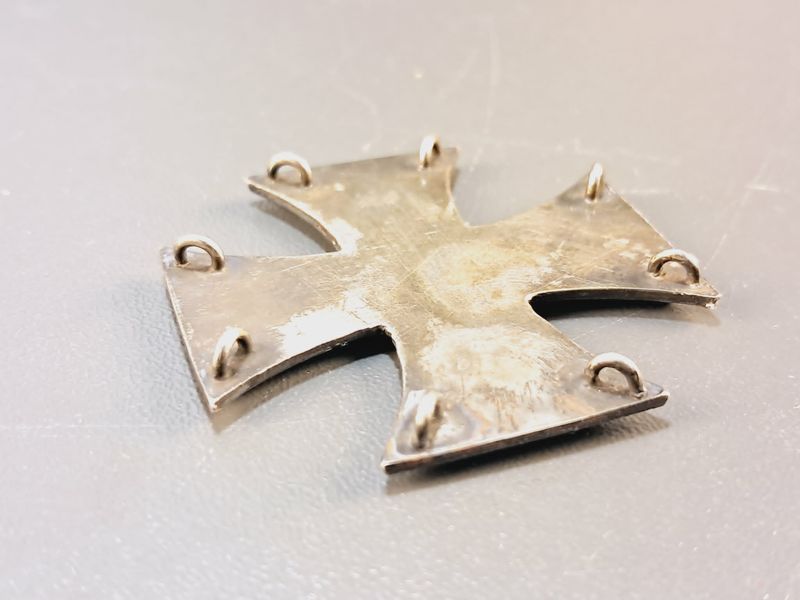
An exceptionally rare and authentic Prussian Iron Cross 1st Class (Eiserne Kreuz I. Klasse) 1813 pattern, representing a museum-grade piece of European military history from the Wars of Liberation against Napoleon. This specific specimen is a textbook early variant, defined by its completely blank, unornamented blackened iron core on the obverse. The core is encased inside a classic multi-piece silver frame showing fine ribbing and a deep, undisturbed natural target patina. The reverse displays a closed, smooth silver backing plate. Soldered directly to the outer corners of each of the four arms are eight small wire attachment loops (two per arm) used to stitch the medal firmly onto the fabric of the recipient's uniform tunic. The absence of a standard vertical pin is historically correct for early 19th-century breast awards. Remaining in excellent structural and aesthetic condition with no modern alterations, this cross represents one of the most elusive targets in advanced historical medal collecting.
Historical context:
The Iron Cross was originally instituted on March 10, 1813, by King Frederick William III of Prussia during the defensive campaigns against the French occupation. It broke traditional class boundaries by being awarded based purely on battlefield valor rather than noble birthright. Because robust pin-back mechanisms were not yet standardized in 1813, early First Class badges were either hand-embroidered from wire cloth or fashioned out of metal with perimeter loops for sewing. Metal sew-on examples like this were highly favored high-end private purchases commissioned by prussian officers from local jewellers for daily wear. Very few genuine examples from this first historical iteration survived to the modern day.