


|
Quantity
|
Total
|
||
|
|
|||
|
|
|||
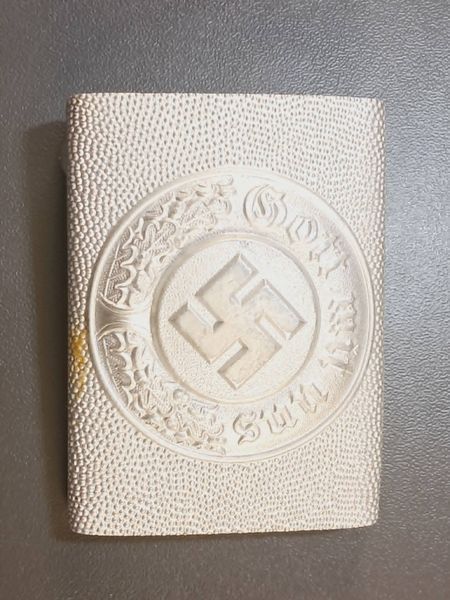
Original uniform belt buckle issued to personnel of the German Order Police (Ordnungspolizei – OrPo), die-stamped from lightweight aluminum alloy.
The front center features the distinctive police-pattern insignia showcasing a unique eagle with down-swept wings clutching a swastika enclosed inside a solid circle.
The central design is bordered by a large circular medallion with double stylized rope rims, displaying a detailed laurel leaf wreath and the traditional motto in Gothic text: "Gott mit uns", translating to "God with us".
The entire background surface of the buckle face presents a fine factory pebbled texture designed to eliminate light glint and reflections during service duties.
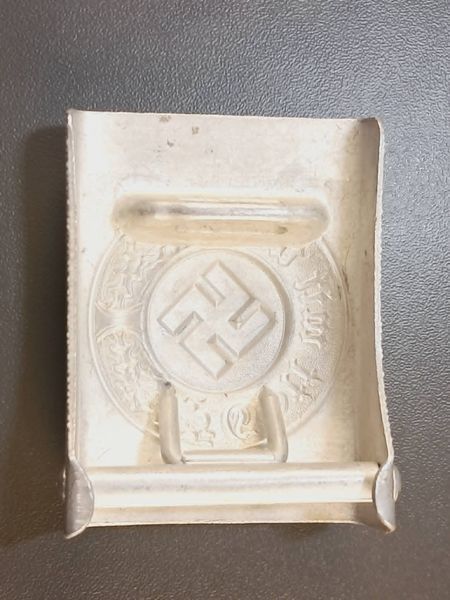
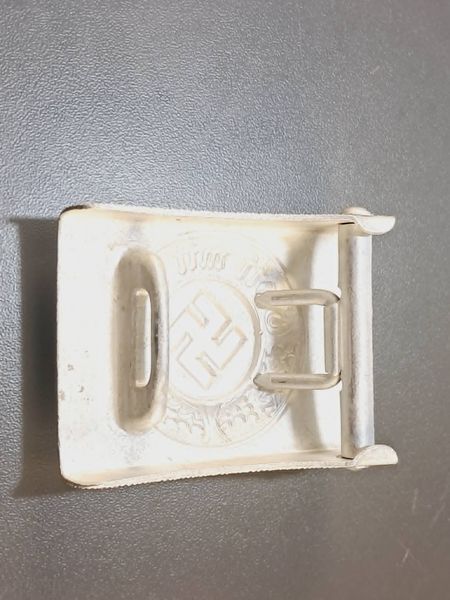
The reverse shows a clean aluminum finish with an integrated sleeve catch featuring typical flattened, rounded anchoring feet.
The mechanical components include its original, fully functional dual-prong wire bar assembly moving smoothly on a sturdy cross axis.
The metal surfaces retain an authentic light aluminum age patina, minor honest storage wear, and light historical dust inside the deep crevices that proves its original era manufacture.
This artifact stands as a textbook example of high-quality pre-war and early-war personal duty gear utilized by municipal and regional police forces between 1936 and 1945.
Historical context:
Aluminum belt buckles were the universal standard for the German Ordnungspolizei throughout the late 1930s and during the opening campaigns of World War II. They are highly sought after by modern militaria enthusiasts due to their crisp die-striking and superior metal craftsmanship compared to later wartime utility steel patterns. The inclusion of the unique police-style eagle with downward wings surrounded by a laurel wreath cleanly differentiated these security forces from the standard German military (Heer), which utilized an oak leaf cluster design. Despite a general shift toward steel production in 1940 to preserve aluminum for aircraft, these high-grade alloy pieces remained widely worn by police officials throughout the war.